
Papa's Pastaria To Go!
Flipline StudiosStrategy
4.668.00 Reviews
- Version
- 1.0.7
- Installs
- 100.00K
- Age Rating
- Everyone
Screenshots
Our Review of Papa's Pastaria To Go!
 Analysis by Appyee
I like Papa's Pastaria To Go! most when I have a short stretch of time and want something more involving than tapping through a passive distraction. A customer’s pasta order becomes a small sequence of choices: prepare the noodles, match the sauce, and place the requested toppings with care. The pleasure is in watching a clear order turn into a finished plate, then seeing how well I handled the rush. It is a strategy game by Flipline Studios, but its decisions are easy to understand even if you have never played one of the studio’s restaurant games.
That clear structure also makes it easy to pick up after a break. I can focus on the next order rather than learning a complicated control scheme, and each completed plate gives me a reason to try another. At the same time, this is not an idle game: the fun depends on paying attention and managing several stages of a meal. If you enjoy a steady rhythm of action, feedback, and improvement, the restaurant has a satisfying pull. If you want a game that plays itself while you look away, this is a poor fit.
Welcome to Portallini!
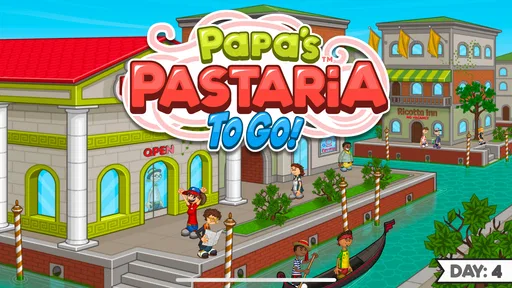
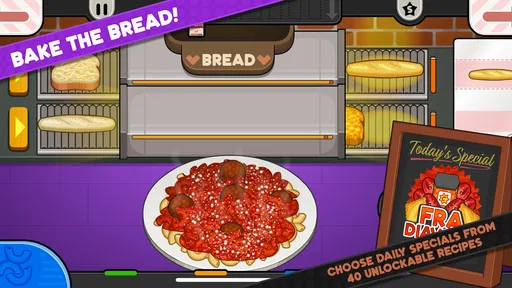
Stepping into the bustling world of Papa's Pastaria To Go!, you find yourself in the quaint, pasta-loving paradise of Portallini. The game kicks off with you taking over a local restaurant, and your mission is to satisfy every pasta craving that comes through your door. The graphics are as delightful as ever, with vibrant colors and whimsical character designs that bring the city to life.
The game mechanics are pretty straightforward, making it accessible for both seasoned players and newcomers. You’ll find yourself juggling between cooking pasta, ladling sauces, and adding toppings to create the perfect dish. It’s all about timing and precision, and trust me, things can get pretty hectic during peak hours!
Cooking Up a Storm
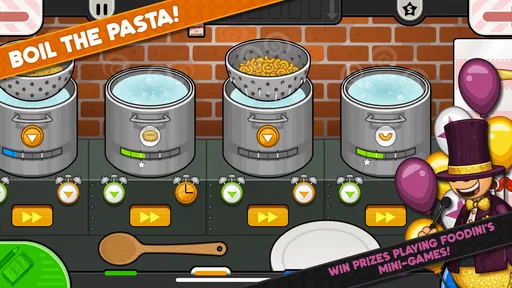
One of the biggest draws of the game is its cooking process, which is both engaging and challenging. You start by boiling pasta to the perfect consistency. Sounds simple, right? Well, not when you have multiple pots on the stove and customers eagerly waiting! Once your pasta is ready, it’s on to the sauce station where you choose from a variety of sauces to match your customer’s order.
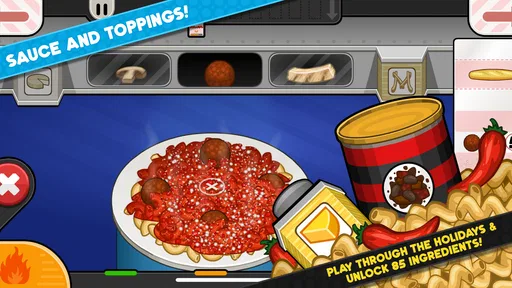
Then comes the fun part—toppings! From meatballs to mushrooms, you’ve got an array of ingredients to create culinary masterpieces. Each order is unique, keeping the gameplay fresh and exciting. And let me tell you, seeing a satisfied customer’s face is oh-so-rewarding!
Meet the Customers
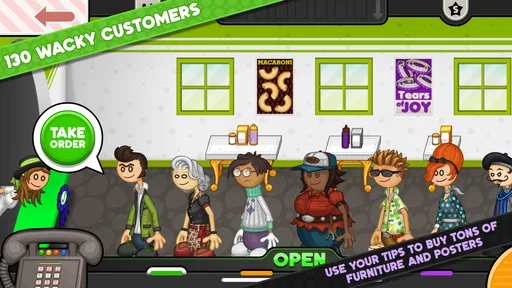
The game isn’t just about cooking; it’s also about building relationships with your patrons. Each customer has their own personality and quirks, making the interactions more than just transactional. Some customers are regulars with specific preferences, while others might surprise you with their wild orders.
As you progress, you’ll unlock new ingredients and recipes, which adds a nice layer of depth to the game. Plus, the more you satisfy your customers, the more tips you earn, which can be used to upgrade your restaurant and equipment. It’s a delightful cycle of serving, earning, and upgrading that keeps you coming back for more.
Customization Galore
One of the standout features is the level of customization available. You can tweak your restaurant’s decor, change your character’s outfit, and even design custom dishes. This personalization aspect makes the game feel uniquely yours and adds a personal touch to your culinary journey.
Additionally, the game offers special events and challenges that spice up the gameplay. These events often come with exclusive rewards and themes, keeping the content fresh and engaging. It’s a clever way to keep players invested and eager to see what’s next.
What Makes Each Shift Work
The satisfying part is not just getting an order right; it is the feedback loop between each station. I make a timing decision at the pasta pot, move on to the sauce, and then have to place the toppings in a way that reflects the customer’s request. A good result makes the next order feel manageable, while a rushed mistake gives me something specific to improve. Attention matters more than frantic tapping: taking a moment to read an order before starting it can prevent avoidable errors when several customers are waiting.
A useful way to play is to treat each dish as a checklist rather than trying to remember the entire order while working. I look for the parts that are easiest to mix up—pasta choice, sauce, and topping placement—and mentally confirm them before moving on. This is especially helpful when the restaurant gets busy, because the pressure comes from switching between tasks, not from complicated controls. The game rewards a calm routine more than a burst of speed.
That rhythm makes the game a good fit for a short break, but it does not mean every session feels equally relaxed. When orders arrive close together, attention is divided between cooking and assembling plates. I enjoy that tension in small doses; it gives the strategy label some substance. On a tired commute or while waiting for an appointment, I would start only if I had enough attention to follow the orders. It is less suitable when I want to glance at my phone intermittently and still expect to do well.
From Good Service to the Next Goal
Tips and restaurant improvements give completed shifts a practical payoff: doing well helps me build toward upgrades, while new ingredients and recipes give later orders more variety. That progression is more motivating than a score that disappears when a round ends, because the effort feels connected to a growing restaurant. The trade-off is that advancement takes repeated service. Players who want every option immediately may find the gradual pace less appealing, while anyone who enjoys earning progress through practice has a reason to return.
Customization gives that progress a more personal side. Changing the character’s outfit or adjusting the restaurant decor lets me make the place feel like my own, but I see it as a pleasant extra rather than the main reason to play. If I’m focused on improving my service, I spend more attention on the order sequence than on appearance. That distinction is useful for deciding what to prioritize: the restaurant’s look adds charm, whereas handling orders well is what keeps the core loop engaging.
The customer variety also changes how I approach a shift. A familiar patron can make an order feel reassuring, but a different request pushes me to check the details instead of relying on habit. I try not to assume that a plate should follow the pattern of the last one; reading carefully is more dependable than guessing from memory. That small habit is one of the most useful ways to reduce mistakes, especially for a new player learning how the stations fit together.
A Good Fit for Focused Play
Compared with many strategy games built around maps, armies, or long-term resource planning, this one keeps its strategy close to the counter. The decisions are immediate and concrete: manage cooking, build the right dish, and serve customers efficiently. Compared with simpler cooking games that lean mostly on rapid taps, the sequence of stations and the gradual restaurant progression give me more to think about. It will not satisfy someone looking for deep tactical planning or a sprawling campaign, but it is a more hands-on choice for players who like time management with a clear food-service theme.
A realistic use case is a quiet evening at home when I want a game I can play in focused bursts. I can work through a shift, see how my service went, and stop without needing to keep track of a complicated story. It can also suit a brief wait if I have enough time to concentrate on a run of orders. For a very short interruption, though, I would choose something that can be paused or ignored more casually; the appeal here comes from staying engaged with the process.
The game is rated Everyone, which makes its light restaurant setting approachable for a broad audience. I would especially recommend it to players who enjoy the familiar satisfaction of following a recipe-like sequence and improving through repetition. People who dislike timed tasks, repeated service routines, or gradually earned progression should think twice. Its charm is tied to doing the work well, so there is no separate action mode that removes the need to manage orders.
Practical Details Before You Play
The game costs $1.99, and in-app purchases range from $0.99 to $4.99 per item. I would go in expecting the paid game experience and treat optional purchases as a separate choice rather than assuming they are necessary for the basic appeal. The version is 1.0.7 and it requires Android 5.0 or later. It has an average rating of 4.6 from 968 ratings, with 100K+ installs; those figures suggest it has found an audience, though they do not tell me whether its steady, order-focused pace will suit a particular player.
One practical question is whether it is worth choosing over another restaurant game. I would pick this one when I want a defined pasta workflow and a gentle sense of restaurant growth, rather than a broad collection of cooking themes or a more competitive strategy challenge. Another question is whether it stays interesting after the initial novelty: the changing customer orders, unlocks, and customization provide reasons to continue, but the basic work remains service at the pasta stations. If that central routine is satisfying to you, the progression supports it; if it already feels repetitive, extra unlocks are unlikely to change your mind.
Final Thoughts
Overall, Papa's Pastaria To Go! successfully translates the beloved desktop experience into a mobile-friendly format without losing any of its charm. It’s a delightful mix of strategy, time management, and creativity that will appeal to fans of the series and newcomers alike. The game captures the essence of running a bustling pasta restaurant in a way that’s both fun and rewarding.
So, if you’re looking for a game that’s both entertaining and challenging, give it a try. Just be warned—it might make you hungry! I would recommend it most to someone who enjoys attentive, repeatable tasks and likes seeing careful work turn into gradual progress. The loop is simple to understand but has enough pressure to keep a shift lively: take an order, prepare it, see how well it went, and start again with a little more experience. For players who prefer calm, focused sessions over deep strategy or idle play, that is a very appealing recipe.
Verdict
Strengths of Papa's Pastaria To Go!
- Engaging gameplay with strategic elements.
- Colorful graphics enhance the experience.
- Easy-to-learn controls for all ages.
- Variety of pasta and sauces to explore.
- No internet needed to play.
Limitations of Papa's Pastaria To Go!
- Repetitive tasks may become tedious.
- Limited updates with new content.
- In-app purchases can be pricey.
- Lack of multiplayer options.
- No cloud save feature available.
Other Releases by Flipline Studios
View All
Papa's Freezeria To Go!
Strategy4.6

Papa's Pizzeria To Go!
Strategy4.3

Papa's Hot Doggeria To Go!
Strategy4.6

Papa's Pancakeria To Go!
Strategy4.6
Similar Picks in This Category
View All
Clash of Clans
Supercell4.5

Plants vs. Zombies™
ELECTRONIC ARTS3.7

Lords Mobile: Kingdom Wars
IGG.COM4.5

Clash Royale
Supercell4.4

State.io — Conquer the World
CASUAL AZUR GAMES4.1

Car Driving School : Car Games
Spark Game Studios3.9
Frequently Asked Questions
What is Papa's Pastaria To Go! all about?
Papa's Pastaria To Go! is a fun time-management game where you manage a pasta restaurant. Players take on the role of a chef, cooking and serving various pasta dishes to demanding customers. The game involves taking orders, cooking pasta, adding sauces and toppings, and ensuring each dish meets customer expectations to earn tips and progress through levels.
How does the gameplay work in Papa's Pastaria To Go!?
In Papa's Pastaria To Go!, you start by taking customer orders and then move to the cooking station. Here, you'll cook pasta to the right texture, add sauces, mix in toppings, and serve the dish. The game requires precision and speed as you balance multiple orders, aiming for high scores and unlocking new ingredients and upgrades as you progress.
Is Papa's Pastaria To Go! suitable for all ages?
Yes, Papa's Pastaria To Go! is designed to be family-friendly and suitable for players of all ages. Its intuitive controls and engaging gameplay make it accessible to children, while its strategic elements and progressive difficulty levels keep it challenging for adults. There is no inappropriate content, making it a safe choice for younger players.
Are there any in-app purchases in Papa's Pastaria To Go!?
Papa's Pastaria To Go! is a premium app, meaning you pay once to download the game. It does not include in-app purchases, so once you've purchased the game, you can enjoy all the features and levels without additional costs. This makes it a great option for those who prefer not to deal with in-app purchases.
Can I play Papa's Pastaria To Go! offline?
Yes, Papa's Pastaria To Go! can be played offline, making it an excellent choice for entertainment on the go without needing an internet connection. Whether you're commuting or simply in an area with limited connectivity, you can enjoy managing your pasta restaurant anytime, anywhere.
Play our best games!


